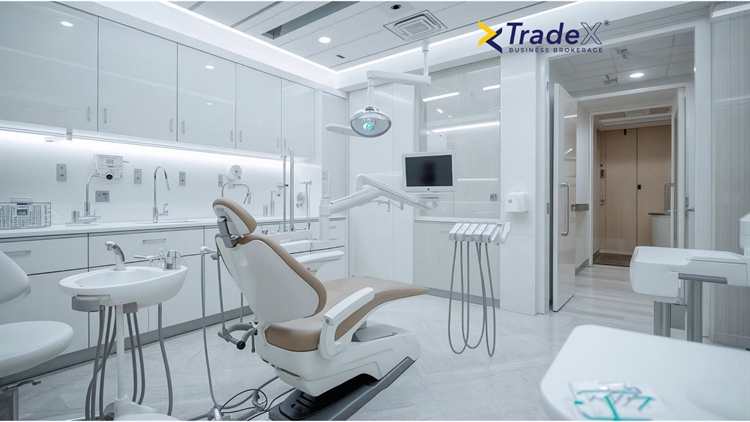
A fully integrated, multi-specialty dental platform with limited owner revenue dependency. Two established sites with several treatment rooms, complete specialty coverage, digital radiology performed on site and an owned CAD/CAM dental laboratory: a degree of integration normally found only in operators with ten or more clinics.
Products and Services
Complete coverage of every major specialty in one place — implantology, prosthetics, orthodontics, oral surgery, endodontics under microscope, periodontology, pedodontics and prophylaxis. A complex case is completed without referral out, prosthetic work is produced in the group’s own laboratory and imaging is performed on site, so the group captures the full case value rather than a share of it.
Operations
Scalable operating model with the following features:
- Premises: Three locations: two clinics with several treating rooms, and a fully equipped lab
- Staff: Lean core team, with specialists on revenue-share; the largest cost category is variable.
- Process: Standardized procedures across sterilization, patient flow, radiology and complaints;
- Compliance: full regulatory stack held and current, no litigation reported
- Systems: Cloud platform captures appointments, treatments, plans and receipts, automates treatment-based recalls and reconciles extracts to the financial statements.
Why this one clears the usual screens
- Revenue does not leave with the seller: clinical work delivered by a team of specialists; owner’s role is supervisory, while patient relationships, records and recall rights remain with the company.
- The numbers are verifiable upfront: both operating entities file annual accounts, and filed turnover matches three years of management accounts.
- The margin is structural: owned prosthetic production and imaging retain value inside the group instead of paying it to external providers.
- Growth requires no capital: at 63% chair occupancy, existing chairs and team capacity can support higher utilization.
- The downside is protected: the business has no debt or shareholder loans and collects about 95% of fees on treatment completion.
What makes a difference
- Imaging and prosthetic production are owned, not bought. The business has in-house radiology and its own laboratory.
- Speed follows from ownership. The vertical integration compresses diagnosis to treatment and keeps margins.
- Recurring patient base: 76% of patients treated in the last twelve months were returning patients.
- The laboratory is a business, not a cost center. More than 50% of revenue comes from external work.
- Long established brand with strong patient trust. Long tenure, minimal patient acquisition cost, favorable reviews create credibility that cannot be bought quickly.
- The brand has already been shown to transfer. Patient attachment sits with the institution rather than clinicians.
- Financing is matched to the case mix. The bank instalment facility supports high-value procedures.
- The regulatory stack is hard to replicate quickly. Three-to-five-year replication barrier for competitors.


